PodcastCrew Editorial Team
October 2, 2026 · 8 min read
What Should Your Business Podcast Actually Be About?
The best business podcasts don't start with a microphone. They start with a clear understanding of what your audience wants to learn from the people inside your company.
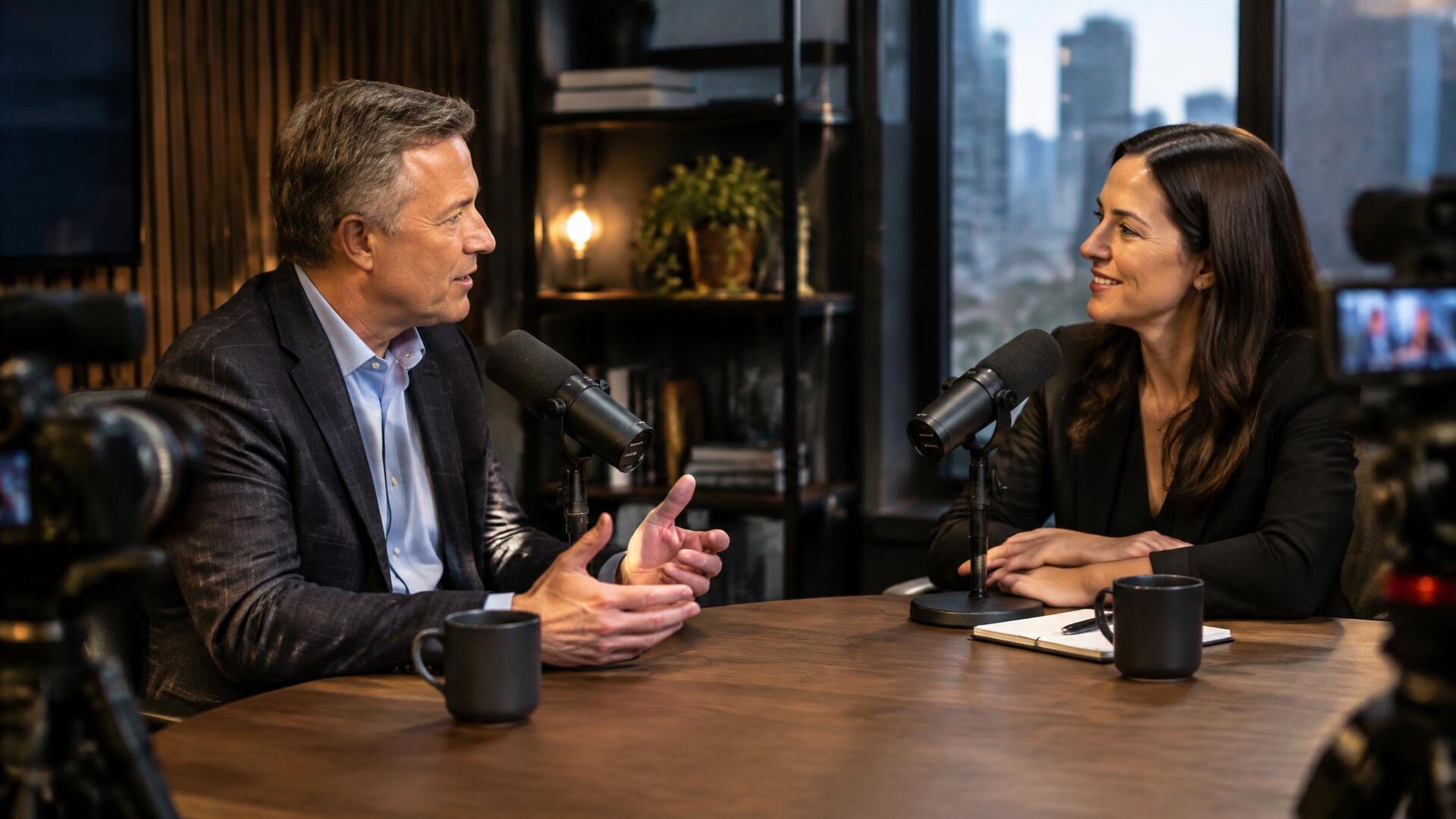
One of the first questions businesses ask when they start considering a podcast is, "What would we even talk about?"
It is a reasonable question. Nobody wants to invest time and money into launching a podcast only to record three episodes and discover that the team has run out of ideas.
But established businesses usually have the opposite problem. They have too many possible topics.
Their customers are asking questions every day. Their sales teams are having conversations with prospects. Their executives have opinions about where the industry is going. Their subject matter experts have spent years learning things that could be genuinely useful to other people in the industry.
The challenge isn't finding something to say.
The challenge is turning all of that knowledge into a podcast with a clear purpose.
Start With Your Customer, Not Your Company
A business podcast should not simply be a weekly advertisement for your company. Your audience has very little reason to spend 45 minutes listening to a sales pitch.
Instead, start with the people you want to reach.
What are they trying to figure out? What decisions are they currently making? What problems keep coming up? What questions do they ask your sales team? What mistakes do you repeatedly see businesses make before they become customers?
These questions are often the beginning of your best podcast topics.
For example, if prospects regularly struggle to understand the difference between two solutions, that could become an entire episode. If customers repeatedly make the same mistake before hiring a provider, your team can explain why it happens and what businesses should consider instead.
The podcast becomes useful because it is based on real questions from real people.
Your Sales Team Is Sitting on a Content Goldmine
If you are struggling to come up with podcast topics, talk to your sales team.
They know exactly what prospects are asking. They know which objections come up repeatedly, which parts of your service require the most explanation, and where potential customers tend to hesitate.
That information is incredibly valuable.
Marketing teams sometimes spend hours brainstorming topics that customers have already told the sales team they care about.
Instead of guessing, listen to those conversations.
Turn recurring questions into episodes. Take common objections and explore them honestly. Ask your experts to explain concepts that prospects regularly misunderstand.
The result is content that has a much stronger connection to the actual buying process.

Your Podcast Needs a Point of View
Useful information is important, but information alone doesn't necessarily make a podcast compelling.
People also want perspective.
What does your CEO think the industry is getting wrong? What has your company changed its mind about? What trend do you believe businesses are underestimating? What advice would your leadership team give to someone entering the industry today?
These questions create much more interesting conversations because they invite people to share what they actually think.
That is particularly important now that AI tools make it easier than ever to produce polished marketing content.
There is more content everywhere.
What becomes more valuable is the experience and perspective behind the content.
Your podcast should sound like your people. Their stories, opinions, lessons, and personalities are part of what makes the show worth listening to.
You Don't Have to Talk About Your Services Every Episode
A business podcast can support your marketing without constantly talking about your services.
In fact, it is often stronger when it doesn't.
You can discuss industry trends, interview customers, bring in outside experts, explore common challenges, talk about lessons from your company's history, or have your leadership team debate an issue that matters to your market.
Your company still benefits from being associated with the conversation, but the audience gets something useful in return.
That creates a healthier relationship with your content.
People don't have to feel like they are being sold to every time they press play.
They simply know that your company consistently creates conversations worth listening to.
Bring Other People Into the Conversation
Guests can also give your podcast more depth.
A customer can talk about what it was actually like to solve a problem. An industry expert can provide a different perspective. A business partner can discuss something changing in the market. Another executive can bring a completely different point of view to the conversation.
There is also a practical benefit to bringing guests onto your show.
When a guest shares an episode with their own network, your company gets introduced to people who may never have discovered you otherwise.
Podcasting can therefore become more than a content strategy. It can become a relationship-building strategy.
You are creating conversations with people who matter to your industry while giving your audience an opportunity to learn from them.
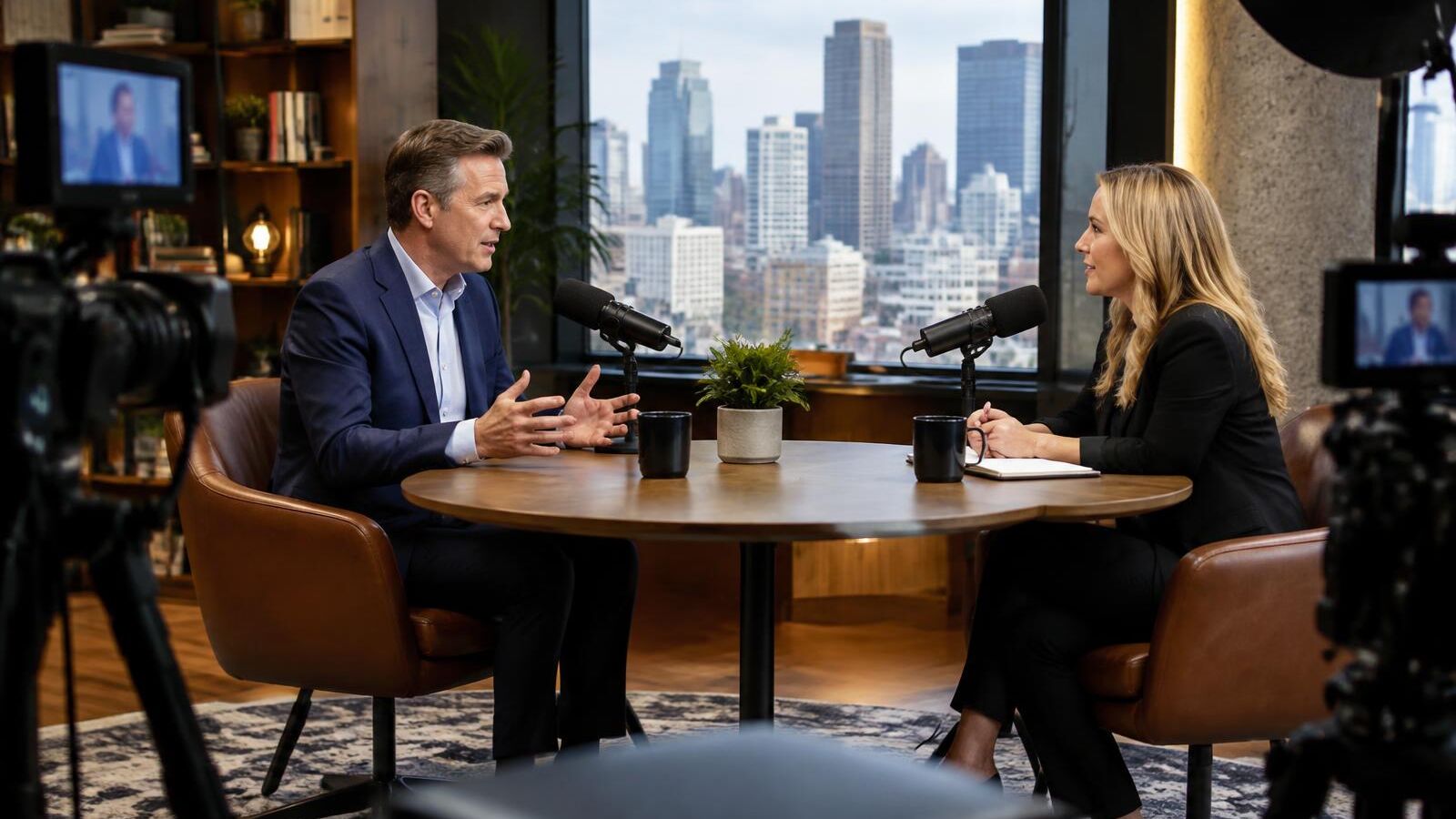
Think Beyond the Podcast Episode
One of the biggest mistakes a business can make is thinking of a podcast as an audio or video file that gets uploaded every week.
The episode is only the beginning.
A strong conversation can become several short-form videos, LinkedIn posts, blog articles, email topics, educational clips, website content, and sales resources.
That is where video podcasting becomes particularly valuable.
You aren't just recording an episode.
You are creating a source of professional media that your marketing team can continue using across multiple channels.
The more strategically you plan the recording, the more opportunities you have to repurpose the conversation afterward.

Your Podcast Should Reflect Your Brand
Your podcast doesn't need to sound like every other business podcast.
The topics should reflect the questions your market cares about. The guests should reflect the relationships your company wants to build. The conversations should reflect the experience and perspective that make your business different.
And the production should reflect the level of professionalism your company wants associated with its brand.
This is one reason the recording environment matters.
Your audience may not consciously think about lighting, audio quality, framing, or camera angles, but they experience the overall quality of the production.
If you are positioning your company as an established professional organization, the media representing that company should feel equally intentional.
This Is Where PodcastCrew Comes In
Starting a podcast is easy.
Building a professional business podcast that you can consistently produce and actually use as part of your marketing is a different thing.
There is planning involved. There is production. There is audio and video. There is editing. There is distribution. There is repurposing. And there is the bigger question of how the podcast fits into the company's overall marketing strategy.
That is where PodcastCrew comes in.
We work with businesses, executives, and industry experts to create professional video-first podcasts that are designed to become useful media assets for the company.
Your team brings the expertise and the conversation.
We handle the production process that turns it into professional media.
Your Podcast Idea Is Probably Already Inside Your Business
If your company has experienced leaders, knowledgeable experts, interesting customers, strong opinions, and years of experience in your industry, you probably already have enough material for a podcast.
You just need to organize it around the questions your audience actually cares about.
That is the difference between starting a podcast because everyone else seems to have one and building a podcast because it gives your company a valuable platform to share what it knows.
At PodcastCrew, we help businesses take those conversations from an idea to a professionally produced podcast and then turn the recordings into additional content that can continue working across marketing and sales.
If you've been thinking about starting a business podcast but don't know where to begin, let's figure out what your company has to say.
Thinking about video for your business?
Tell us what you're working on — leadership and authority videos, podcasting, or full production — and we'll get back to you with a straight answer.